Vegetarian Giouvetsi – Greek Orzo Casserole with Vegetables
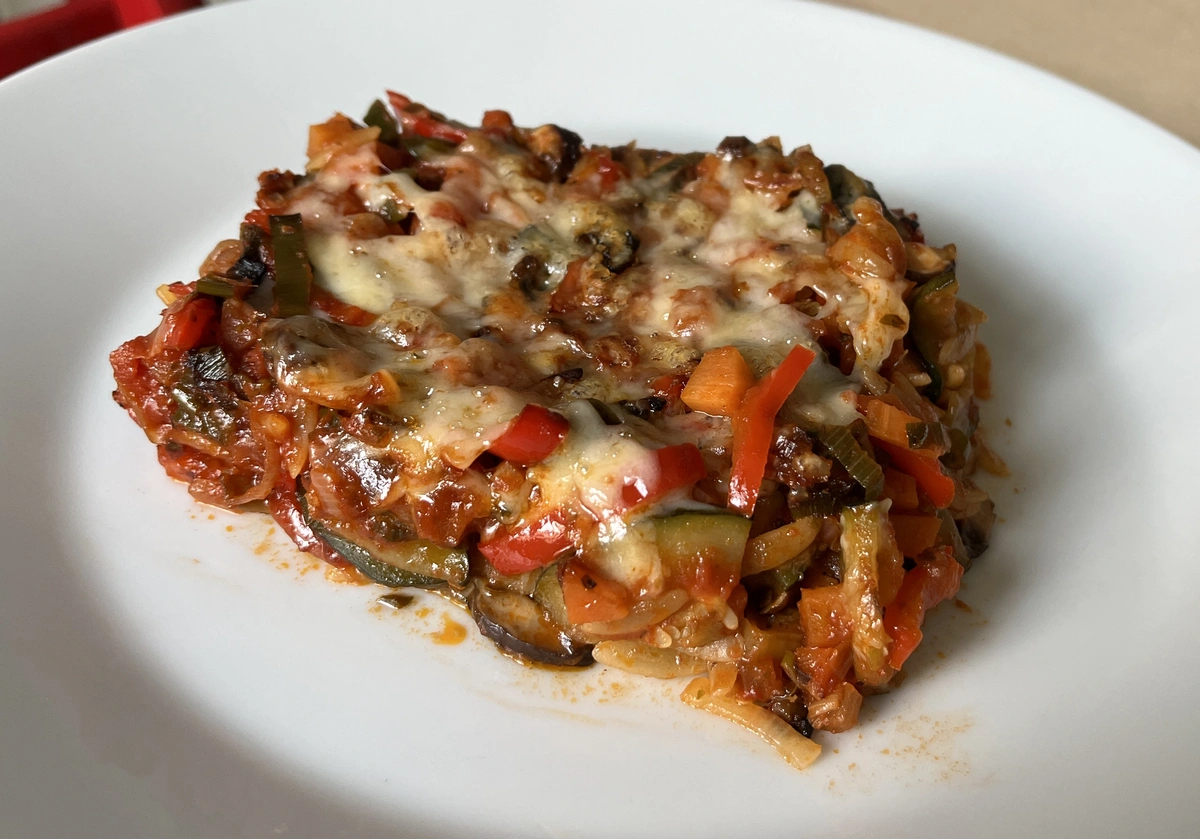
A Greek casserole with baked rice noodles — here as a vegetarian version with lots of vegetables.
Recipe Categories:
Ingredients:
Steam rises from the casserole as orzo and garden vegetables mingle with a rich tomato sauce: this is giouvetsi, a beloved Greek oven-baked dish originally made with lamb or beef. My vegetarian giouvetsi keeps the essence — tender kritharaki (orzo) noodles, mingling with zucchini, mushrooms, carrot, and sweet bell pepper — and delivers all the comfort of a bubbling gratin without the heavy carbon footprint. If you opt to skip or swap the cheese, you can easily make it vegan, too.
While “giouvetsi” refers to the traditional clay pot, this cozy casserole works just as well in any ovenproof dish. The key technique is to let the rice-shaped noodles soak up flavor-packed sauce as they bake, so they become tender and juicy but never soggy. Toasting the orzo first helps it keep a little bite — an easy step that makes a real difference.
Seasonal vegetables shine here, so feel free to use what’s fresh or nearly past its prime, too. For herbs, I love the combination of thyme and smoked paprika, but fresh oregano or rosemary will fit right in. If you’re looking to lighten the footprint further, try finishing with herbed breadcrumbs or your favorite plant-based cheese in place of dairy.
This version is adapted from Zitronen & Olivenöl, a favorite German blog brimming with Greek classics.
Let the pan do the work, and trust your senses: the sauce should bubble gently, and the top should turn golden and inviting. Serve straight from the oven with a crisp salad and, if you like, a wedge of lemon to brighten things up.
Related Recipes

Vegetarian Pide
Oven-baked yeast dough with a hearty topping and served with a yoghurt sauce. This Turkish recipe is simply delicious!

Baked Feta with Tomatoes and Chickpeas
A twist on the viral TikTok hit, with chickpeas instead of pasta. Super easy to prepare and in half an hour you have a great meal out of the oven.

Crispy Hasselback Potatoes with Tomato Aioli and a Side Salad
A simple recipe for Mediterranean potatoes with homemade aioli
Recipe
Vegetarian giouvetsi with lots of vegetables, straight from the oven.
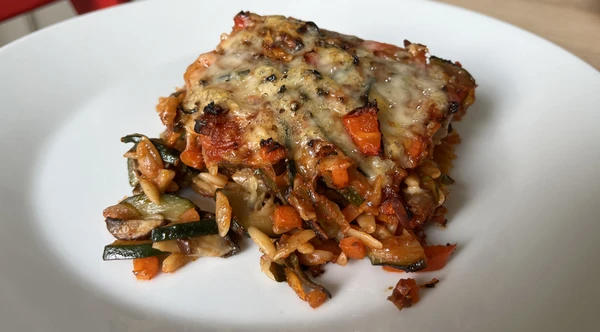
Vegetarian giouvetsi with lots of vegetables, straight from the oven.
Ingredients
Preparation Time: 10 min
Total Time: 30 min
Servings: 2
- • 1 small red onion (about 60g)
- • 1 clove garlic
- • 1/2 zucchini (approx. 100g)
- • 1 carrot (about 80g)
- • 1 pointed bell pepper (about 120g)
- • 1 spring onion
- • 100g mushrooms
- • 125g kritharaki (orzo, rice-shaped noodles)
- • 4 teaspoons olive oil
- • 1 tablespoon tomato paste
- • 1 teaspoon thyme (dried or fresh)
- • 150g strained tomatoes (passata)
- • 200ml water, divided
- • 1 pinch salt
- • 1 pinch pepper
- • 1/2 teaspoon smoked paprika
- • about 75g grated cheese for gratinating (swap for breadcrumbs to make vegan)
Ingredients
Servings: 2
Preparation Time: 10 min
Total Time: 30 min
- • 1 small red onion (about 60g)
- • 1 clove garlic
- • 1/2 zucchini (approx. 100g)
- • 1 carrot (about 80g)
- • 1 pointed bell pepper (about 120g)
- • 1 spring onion
- • 100g mushrooms
- • 125g kritharaki (orzo, rice-shaped noodles)
- • 4 teaspoons olive oil
- • 1 tablespoon tomato paste
- • 1 teaspoon thyme (dried or fresh)
- • 150g strained tomatoes (passata)
Instructions
- 1 Peel and finely dice the onion and garlic. Wash the zucchini, carrot, bell pepper, spring onion, and mushrooms. Peel the carrot if needed. Cut all the vegetables into small cubes or slices.
- 2 Heat 1 teaspoon olive oil in a pan over medium heat. Add the kritharaki (orzo) and toast for about 1 minute, stirring often, until lightly golden. Transfer the toasted noodles to a medium casserole dish.
- 3 Add 1 more teaspoon olive oil to the pan. Sauté the zucchini and mushrooms for 3–4 minutes, until lightly browned. Add to the casserole dish with the noodles.
- 4 Preheat the oven to 200°C (fan-assisted).
- 5 Add the remaining 2 teaspoons olive oil to the pan. Sauté the onion, garlic, carrot, bell pepper, and spring onion over medium heat for 4–5 minutes, stirring occasionally, until softened. Stir in the thyme and tomato paste; cook for 2 minutes to deepen the flavor.
- 6 Pour in the strained tomatoes and 100ml water. Stir and simmer gently for 5–7 minutes, until the sauce is slightly thickened.
- 7 Combine the sauce with the noodles and sautéed vegetables in the casserole dish. Mix well. Season with salt, pepper, and smoked paprika. Check that the noodles are nearly covered in liquid; add up to 100ml more water if needed.
- 8 Bake on the middle rack for 20–25 minutes, until the noodles are just tender and most of the liquid is absorbed. About 8 minutes before the end of baking time, sprinkle grated cheese evenly over the top (or use a vegan alternative), and continue baking until golden and bubbling.
Carbon Footprint
Carbon Footprint: 1576 g CO₂e
This ranks it number 27 out of 59 recipes published on the blog so far in terms of estimated carbon footprint.
The estimated emissions are therefore slightly better than the average of the recipes.
When it comes to the individual ingredients, the cheese and the various vegetables are particularly noticeable: We actually only sprinkle a layer of cheese on top at the end, but this immediately causes almost 30% of the climate impact of this recipe (compared to 7% of the ingredient weight due to cheese). The opposite is true for vegetables: Onion, zucchini, carrot, and pointed bell pepper together account for 35% of the ingredient weight, but their combined carbon footprint is only about 10% of the giouvetsi's total footprint.
Comparison of Ingredients
| Ingredients | Carbon footprint per kg | Carbon footprint for recipe | % of ingredients | % of CO₂ emissions |
|---|---|---|---|---|
| onion | 0.2 | 10 | 4% | 1% |
| garlic | 0.5 | 1 | 0% | 0% |
| zucchini | 0.2 | 20 | 9% | 1% |
| carrot | 0.1 | 8 | 7% | 1% |
| pointed bellpepper | 0.6 | 96 | 14% | 6% |
| spring onion | 0.7 | 14 | 2% | 1% |
| button mushrooms | 1.3 | 130 | 9% | 8% |
| kritharaki (orzo) | 0.7 | 88 | 11% | 6% |
| olive oil | 3.2 | 80 | 2% | 5% |
| tomato paste | 4.3 | 52 | 1% | 3% |
| thyme | 1.1 | 7 | 1% | 0% |
| passata (strained tomatoes) | 1.8 | 270 | 13% | 17% |
| water | 0.0 | 0 | 18% | 0% |
| salt | 0.7 | 1 | 0% | 0% |
| pepper | 1.4 | 1 | 0% | 0% |
| paprika powder | 1.1 | 3 | 0% | 0% |
| grated cheese | 6.0 | 450 | 7% | 29% |
| Sauté vegetables | 104 | 7% | ||
| Bake casserole | 241 | 15% |
Linked ingredients lead to every measurement of that food in our carbon footprint database. Values there come from several sources and can differ from the figure used for this recipe.
Instructions
- 1 Peel and finely dice the onion and garlic. Wash the zucchini, carrot, bell pepper, spring onion, and mushrooms. Peel the carrot if needed. Cut all the vegetables into small cubes or slices.
- 2 Heat 1 teaspoon olive oil in a pan over medium heat. Add the kritharaki (orzo) and toast for about 1 minute, stirring often, until lightly golden. Transfer the toasted noodles to a medium casserole dish.
- 3 Add 1 more teaspoon olive oil to the pan. Sauté the zucchini and mushrooms for 3–4 minutes, until lightly browned. Add to the casserole dish with the noodles.
- 4 Preheat the oven to 200°C (fan-assisted).
- 5 Add the remaining 2 teaspoons olive oil to the pan. Sauté the onion, garlic, carrot, bell pepper, and spring onion over medium heat for 4–5 minutes, stirring occasionally, until softened. Stir in the thyme and tomato paste; cook for 2 minutes to deepen the flavor.
- 6 Pour in the strained tomatoes and 100ml water. Stir and simmer gently for 5–7 minutes, until the sauce is slightly thickened.
- 7 Combine the sauce with the noodles and sautéed vegetables in the casserole dish. Mix well. Season with salt, pepper, and smoked paprika. Check that the noodles are nearly covered in liquid; add up to 100ml more water if needed.
- 8 Bake on the middle rack for 20–25 minutes, until the noodles are just tender and most of the liquid is absorbed. About 8 minutes before the end of baking time, sprinkle grated cheese evenly over the top (or use a vegan alternative), and continue baking until golden and bubbling.
Carbon Footprint
Carbon Footprint (2 portions): 1576 g CO₂e
This ranks it number 27 out of 59 recipes published on the blog so far in terms of estimated carbon footprint.
The estimated emissions are therefore slightly better than the average of the recipes.
When it comes to the individual ingredients, the cheese and the various vegetables are particularly noticeable: We actually only sprinkle a layer of cheese on top at the end, but this immediately causes almost 30% of the climate impact of this recipe (compared to 7% of the ingredient weight due to cheese). The opposite is true for vegetables: Onion, zucchini, carrot, and pointed bell pepper together account for 35% of the ingredient weight, but their combined carbon footprint is only about 10% of the giouvetsi's total footprint.
Comparison of Ingredients
| Ingredients | Carbon footprint per kg | Carbon footprint for recipe | % of ingredients | % of CO₂ emissions |
|---|---|---|---|---|
| onion | 0.2 | 10 | 4% | 1% |
| garlic | 0.5 | 1 | 0% | 0% |
| zucchini | 0.2 | 20 | 9% | 1% |
| carrot | 0.1 | 8 | 7% | 1% |
| pointed bellpepper | 0.6 | 96 | 14% | 6% |
| spring onion | 0.7 | 14 | 2% | 1% |
| button mushrooms | 1.3 | 130 | 9% | 8% |
| kritharaki (orzo) | 0.7 | 88 | 11% | 6% |
| olive oil | 3.2 | 80 | 2% | 5% |
| tomato paste | 4.3 | 52 | 1% | 3% |
| thyme | 1.1 | 7 | 1% | 0% |
| passata (strained tomatoes) | 1.8 | 270 | 13% | 17% |
| water | 0.0 | 0 | 18% | 0% |
| salt | 0.7 | 1 | 0% | 0% |
| pepper | 1.4 | 1 | 0% | 0% |
| paprika powder | 1.1 | 3 | 0% | 0% |
| grated cheese | 6.0 | 450 | 7% | 29% |
| Sauté vegetables | 104 | 7% | ||
| Bake casserole | 241 | 15% |
Linked ingredients lead to every measurement of that food in our carbon footprint database. Values there come from several sources and can differ from the figure used for this recipe.