Paneer Korma – Creamy Paneer Curry with Cashews and Coconut
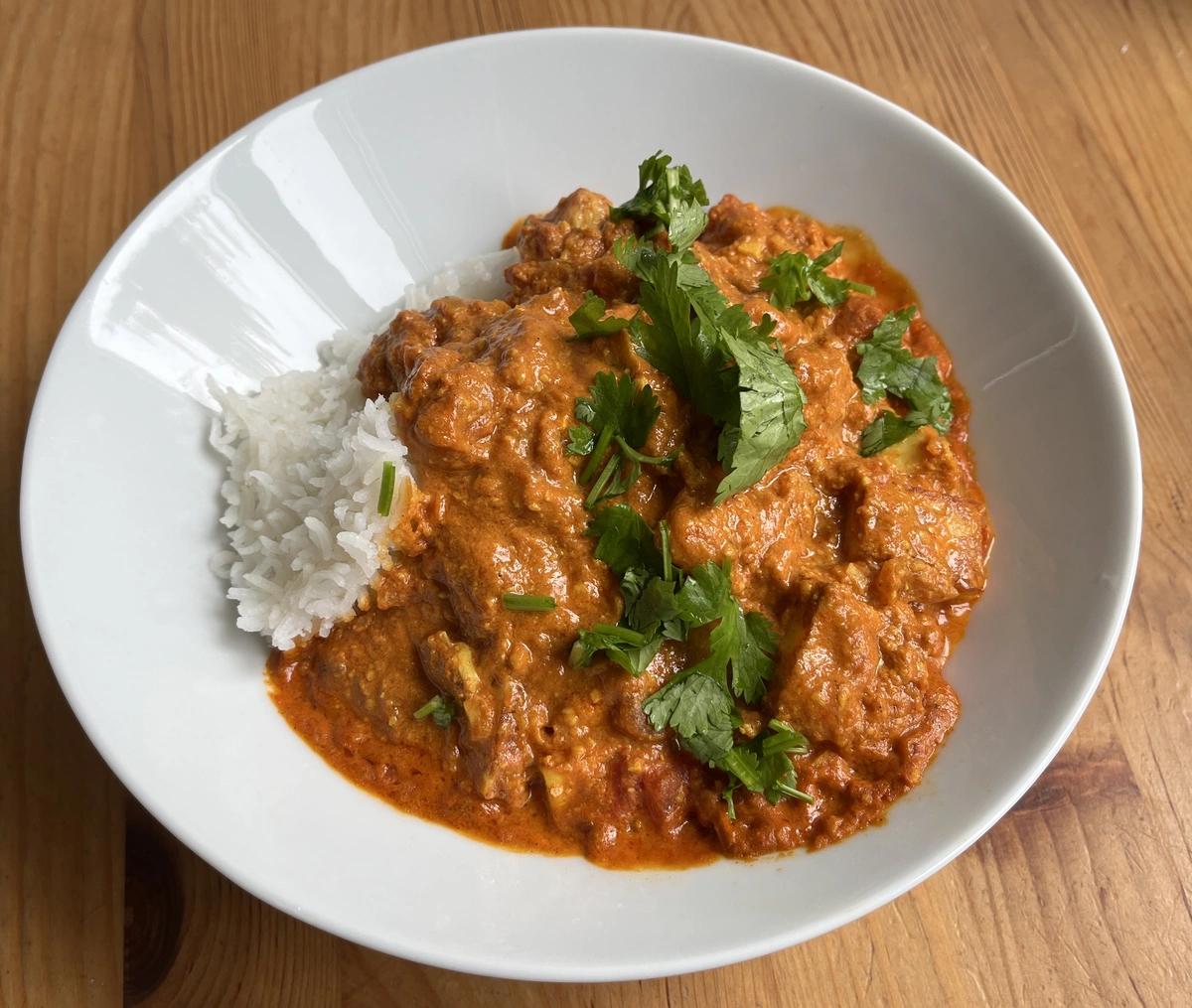
A fragrant curry in which paneer bathes in a sauce of tomatoes, coconut milk and cashews.
Recipe Categories:
There’s calm comfort in a bowl of paneer korma — gentle spice, creamy sauce, and just a hint of tang. This North Indian classic brings together cubes of paneer, a fresh cheese popular across South Asia, and a velvety korma sauce built from cashews, coconut milk, and tomatoes. Compared to heavier meat kormas, this paneer version feels lighter but just as satisfying, and keeps the focus on plant-rich ingredients.
I rely on two tricks for the right texture: blend soaked cashews with coconut milk for a lush sauce, and toast the remaining cashews for crunch. You’ll want to stir the yogurt in off the heat — that way, the sauce stays smooth and doesn’t split. Paneer is easy to find in most well-stocked shops, but if you’re looking to reduce the dish’s carbon footprint, feel free to swap in firm tofu or a handful of chickpeas for part of the cheese.
If you don’t have cashews, you can substitute with blanched almonds for a slightly different flavor. I usually serve this curry with steaming basmati rice, but naan or another flatbread is just as welcome. The spicing here is mild — perfect for varied palates and adaptable with a pinch more chili if you want heat.
Inspired by Caro in the Kitchen, this recipe finds its groove in everyday routines and is even better the next day. If you have a small bunch of coriander, a scatter over the finished dish brightens it all up and puts food waste to good use.
Related Recipes

Roopa Gulati's Palak Paneer: Curry with Spinach and Indian Cheese
Palak paneer is a classic Indian curry with spinach and fried cheese. Very simple and very tasty.

Aloo Mattar Makhani - Curry with Potatoes and Peas
A simple Indian curry with potatoes and peas in a spicy tomato sauce.

Tofu Tikka Masala
A great aromatic curry - even for those who don't really like tofu. vegetarian, easily turned vegan.
Recipe

The star of the curry is the creamy sauce made from tomatoes, coconut milk and cashew nuts.
Ingredients
Preparation Time: 10 min
Total Time: 40 min
Servings: 2
- • 60g cashews
- • 100ml coconut milk
- • 200g paneer
- • 2 tbsp neutral oil (e.g. rapeseed oil), divided
- • 120g basmati rice (or other long-grain rice) as a side
- • 2 cloves garlic
- • 15g ginger
- • 1 medium onion (approx. 150g)
- • 1 pinch ground cinnamon
- • 1 tsp chili powder
- • 1 pinch ground turmeric
- • 1 pinch ground coriander
- • 1 tsp tomato paste
- • 200g canned tomatoes (tinned tomatoes)
- • 1/2 tsp salt, plus more to taste
- • 10ml lemon juice
- • 50g plain yogurt
Ingredients
Servings: 2
Preparation Time: 10 min
Total Time: 40 min
- • 60g cashews
- • 100ml coconut milk
- • 200g paneer
- • 2 tbsp neutral oil (e.g. rapeseed oil), divided
- • 120g basmati rice (or other long-grain rice) as a side
- • 2 cloves garlic
- • 15g ginger
- • 1 medium onion (approx. 150g)
- • 1 pinch ground cinnamon
- • 1 tsp chili powder
- • 1 pinch ground turmeric
- • 1 pinch ground coriander
Instructions
- 1 Pour boiling water over half the cashews (30g) in a small bowl and soak for 15–30 minutes. Drain. Blend the soaked cashews with the coconut milk until smooth and creamy.
- 2 Cut the paneer into 1.5cm cubes. Heat 1 tbsp oil in a large pan over medium to medium-high heat. Add the paneer cubes and fry for 5–7 minutes, turning to achieve golden color on all sides. Add the remaining 30g cashews and toast for 1–2 minutes until golden and aromatic. Remove the paneer and cashews from the pan and set aside.
- 3 Rinse the rice in a sieve under cold water until the water runs clear. Combine with 240ml water and a pinch of salt in a saucepan. Bring to a boil, cover, and simmer over low heat for 10–12 minutes. Remove from the heat and let stand, covered, for 5 minutes.
- 4 Peel and finely chop the garlic, ginger, and onion. Heat the remaining 1 tbsp oil in the same pan over medium heat. Sauté the onion for 5–7 minutes until translucent and lightly golden. Add garlic and ginger; cook for 1 minute. Sprinkle in the cinnamon, chili powder, turmeric, coriander, and add tomato paste; stir and toast for 30–60 seconds until fragrant. Pour in the canned tomatoes and simmer gently for 3–5 minutes. Stir in the cashew–coconut blend and continue to simmer over low heat for 5–8 minutes until the sauce is glossy and creamy. Season with salt and lemon juice.
- 5 Remove the pan from the heat. Stir in the yogurt gently (do not return to the heat to prevent curdling). Fold in the paneer cubes and toasted cashews; let sit for 1–2 minutes to warm through. If the sauce is too thick, add hot water 1 tablespoon at a time to reach your desired consistency.
- 6 Serve the paneer korma with hot rice. If you like, garnish with fresh coriander.
Carbon Footprint
Carbon Footprint: 2535 g CO₂e
This ranks it number 49 out of 59 recipes published on the blog so far in terms of estimated carbon footprint.
Overall, it is one of the 20% of recipes with the highest climate impact - at least 80% of recipes cause fewer emissions than this dish. 😞
Paneer is the main reason for the curry's high CO2 footprint: it accounts for less than a quarter of the ingredients by weight but more than half of the estimated CO2 emissions. The other ingredients have a comparatively better footprint and tend to contribute below average to the dish's greenhouse gas balance.
Comparison of Ingredients
| Ingredients | Carbon footprint per kg | Carbon footprint for recipe | % of ingredients | % of CO₂ emissions |
|---|---|---|---|---|
| Cashews | 2.1 | 125 | 7% | 5% |
| Coconut milk | 0.5 | 52 | 12% | 2% |
| Paneer | 7.1 | 1422 | 24% | 52% |
| Oil | 3.3 | 50 | 2% | 2% |
| Garlic | 0.5 | 3 | 1% | 0% |
| Ginger | 0.5 | 4 | 1% | 0% |
| Onion | 0.2 | 10 | 6% | 0% |
| Cinnamon | 1.1 | 1 | 0% | 0% |
| Chili powder | 1.1 | 2 | 0% | 0% |
| Turmeric | 1.1 | 1 | 0% | 0% |
| Coriander (ground) | 1.1 | 2 | 0% | 0% |
| Tomato paste | 4.3 | 17 | 0% | 1% |
| Canned tomatoes | 1.8 | 360 | 24% | 13% |
| Salt | 0.7 | 1 | 0% | 0% |
| Lemon juice | 0.6 | 6 | 1% | 0% |
| Yogurt | 1.7 | 85 | 6% | 3% |
| Rice | 3.1 | 372 | 14% | 14% |
| Fry the paneer | 101 | 4% | ||
| Simmer curry | 60 | 2% | ||
| Cook rice | 37 | 1% |
Linked ingredients lead to every measurement of that food in our carbon footprint database. Values there come from several sources and can differ from the figure used for this recipe.
Instructions
- 1 Pour boiling water over half the cashews (30g) in a small bowl and soak for 15–30 minutes. Drain. Blend the soaked cashews with the coconut milk until smooth and creamy.
- 2 Cut the paneer into 1.5cm cubes. Heat 1 tbsp oil in a large pan over medium to medium-high heat. Add the paneer cubes and fry for 5–7 minutes, turning to achieve golden color on all sides. Add the remaining 30g cashews and toast for 1–2 minutes until golden and aromatic. Remove the paneer and cashews from the pan and set aside.
- 3 Rinse the rice in a sieve under cold water until the water runs clear. Combine with 240ml water and a pinch of salt in a saucepan. Bring to a boil, cover, and simmer over low heat for 10–12 minutes. Remove from the heat and let stand, covered, for 5 minutes.
- 4 Peel and finely chop the garlic, ginger, and onion. Heat the remaining 1 tbsp oil in the same pan over medium heat. Sauté the onion for 5–7 minutes until translucent and lightly golden. Add garlic and ginger; cook for 1 minute. Sprinkle in the cinnamon, chili powder, turmeric, coriander, and add tomato paste; stir and toast for 30–60 seconds until fragrant. Pour in the canned tomatoes and simmer gently for 3–5 minutes. Stir in the cashew–coconut blend and continue to simmer over low heat for 5–8 minutes until the sauce is glossy and creamy. Season with salt and lemon juice.
- 5 Remove the pan from the heat. Stir in the yogurt gently (do not return to the heat to prevent curdling). Fold in the paneer cubes and toasted cashews; let sit for 1–2 minutes to warm through. If the sauce is too thick, add hot water 1 tablespoon at a time to reach your desired consistency.
- 6 Serve the paneer korma with hot rice. If you like, garnish with fresh coriander.
Carbon Footprint
Carbon Footprint (2 portions): 2535 g CO₂e
This ranks it number 49 out of 59 recipes published on the blog so far in terms of estimated carbon footprint.
Overall, it is one of the 20% of recipes with the highest climate impact - at least 80% of recipes cause fewer emissions than this dish. 😞
Paneer is the main reason for the curry's high CO2 footprint: it accounts for less than a quarter of the ingredients by weight but more than half of the estimated CO2 emissions. The other ingredients have a comparatively better footprint and tend to contribute below average to the dish's greenhouse gas balance.
Comparison of Ingredients
| Ingredients | Carbon footprint per kg | Carbon footprint for recipe | % of ingredients | % of CO₂ emissions |
|---|---|---|---|---|
| Cashews | 2.1 | 125 | 7% | 5% |
| Coconut milk | 0.5 | 52 | 12% | 2% |
| Paneer | 7.1 | 1422 | 24% | 52% |
| Oil | 3.3 | 50 | 2% | 2% |
| Garlic | 0.5 | 3 | 1% | 0% |
| Ginger | 0.5 | 4 | 1% | 0% |
| Onion | 0.2 | 10 | 6% | 0% |
| Cinnamon | 1.1 | 1 | 0% | 0% |
| Chili powder | 1.1 | 2 | 0% | 0% |
| Turmeric | 1.1 | 1 | 0% | 0% |
| Coriander (ground) | 1.1 | 2 | 0% | 0% |
| Tomato paste | 4.3 | 17 | 0% | 1% |
| Canned tomatoes | 1.8 | 360 | 24% | 13% |
| Salt | 0.7 | 1 | 0% | 0% |
| Lemon juice | 0.6 | 6 | 1% | 0% |
| Yogurt | 1.7 | 85 | 6% | 3% |
| Rice | 3.1 | 372 | 14% | 14% |
| Fry the paneer | 101 | 4% | ||
| Simmer curry | 60 | 2% | ||
| Cook rice | 37 | 1% |
Linked ingredients lead to every measurement of that food in our carbon footprint database. Values there come from several sources and can differ from the figure used for this recipe.