Red Lentil Balls with Walnuts (and Side Salad)
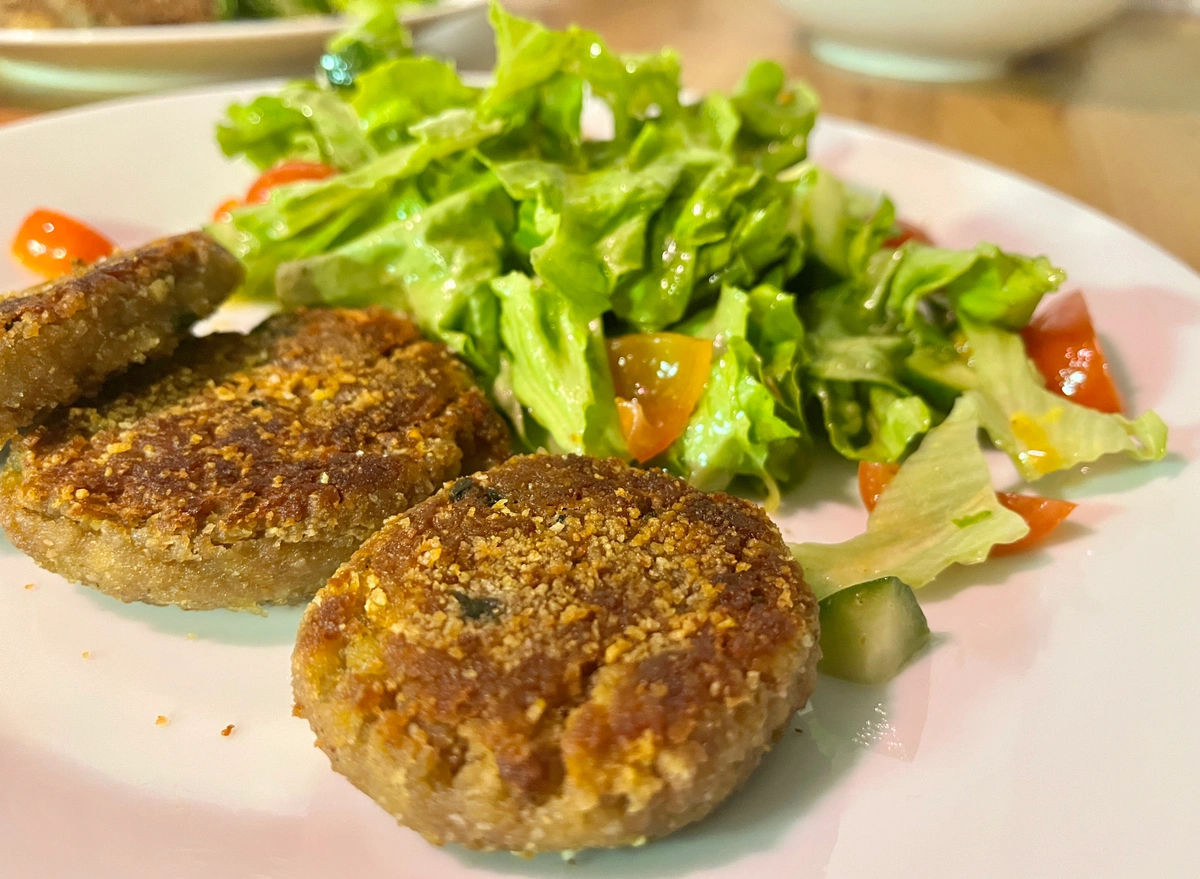
These red lentil balls with walnuts are quick to make and can be seasoned differently to suit your own taste.
Recipe Categories:
If you’re looking for a relatively uncomplicated recipe for roasted vegetable balls, look no further! These lentil and walnut balls are quick to prepare: You’ll have a meal on the table in just over half an hour.
The red lentils cook very quickly and make a good dough. However, as the dough is mostly lentils and flour, it is important to season it well so that it is not too bland. On my first try, I felt I had used a lot of spices, but the flavor was quite subtle, and I will use more next time. You can easily adjust the spices to suit your taste: The cumin and chili seasoning suggested here has a slight oriental flavor, but the recipe would certainly work with curry or even Italian spices.
The recipe comes from Anke Gröner, who got it from another cooking blog that no longer exists. Anke notes that the balls are quite filling - and I can confirm that. (That’s why I reduced the quantity slightly - it was a bit much for two portions)
Of course, you can be flexible with the side dishes and serve rice as well. However, I found the salad with its slightly tart dressing to be a good combination that can be quickly prepared on the side while the lentil balls are frying in the pan.
Related Recipes

Curry Lentil Balls with Salad
Quick and easy curry lentil balls - deep-fried and simply delicious.

Crispy Zucchini and Orzo Salad with Chimichurri
Greek zucchinis and Argentinian herb sauce - the perfect combination.

Chana Masala: Indian Chickpea Curry
A quick and easy recipe for a classic Indian curry. So simple and so delicious!
Recipe
Red lentil balls with walnuts and side salad
Ingredients
Preparation Time: 5 min
Total Time: 45 min
Servings: 2
- • 1 onion
- • 1 clove of garlic
- • 20 g oil, e.g. sunflower oil
- • 160 g red lentils
- • about 360 g vegetable stock
- • about 5-10 g fresh flat-leaf parsley
- • about 25 g walnuts (about 1 handful)
- • 80 g flour
- • 10 g lemon juice
- • 1 pinch of cumin
- • 1 pinch of chili powder
- • 1 pinch of salt
- • 1 pinch of pepper
- • for frying: about 50 g oil
- • 160 g lettuce
- • 30-40 g cucumber
- • 30-40 g cherry tomatoes
- • 30 g oil
- • 15 g vinegar
- • 10 g mustard
- • 2 g sugar
- • 1 pinch of salt
- • 1 pinch of pepper
Ingredients
Servings: 2
Preparation Time: 5 min
Total Time: 45 min
- • 1 onion
- • 1 clove of garlic
- • 20 g oil, e.g. sunflower oil
- • 160 g red lentils
- • about 360 g vegetable stock
- • about 5-10 g fresh flat-leaf parsley
- • about 25 g walnuts (about 1 handful)
- • 80 g flour
- • 10 g lemon juice
- • 1 pinch of cumin
- • 1 pinch of chili powder
- • 1 pinch of salt
Instructions
- 1 Peel and finely dice the onion and garlic and sauté in oil in a frying pan over medium heat.
- 2 Wash the lentils and add to the frying pan. Add the vegetable stock and cook for about 10 minutes, until the mixture is fairly thick. (If necessary, add a little water or vegetable stock to prevent the mixture from burning).
- 3 While the lentils are cooking, chop the parsley and walnuts.
- 4 In a bowl, mix the lentil mixture with the parsley, walnuts, flour, and a squeeze of lemon juice. Season generously with cumin, chili powder, salt, and pepper (really season well, otherwise it will be rather bland because of all the lentils and flour).
- 5 Allow the mixture to cool slightly and form small balls. Fry in a pan with oil.
- 6 While the lentil balls are frying, prepare the salad: Wash and dice the cucumber. Wash the lettuce and cut into bite-sized pieces. Make a dressing with the oil, vinegar, mustard, sugar, salt, and pepper.
- 7 Serve the fried lentil balls with the salad.
Carbon Footprint
Carbon Footprint: 1416 g CO₂e
This ranks it number 21 out of 59 recipes published on the blog so far in terms of estimated carbon footprint.
The estimated emissions are therefore slightly better than the average of the recipes.
If you compare it to meat-based recipes, for example Schnitzel with potato salad or Lasagna have a carbon footprint that is around three to four times higher than the lentil. Looking at the individual ingredients, the very good carbon footprints of onions and lettuce stand out. You can also see that the carbon footprint tends to be slightly higher for ingredients that have already been processed, such as oil and vegetable stock.
Comparison of Ingredients
| Ingredients | Carbon footprint per kg | Carbon footprint for recipe | % of ingredients | % of CO₂ emissions |
|---|---|---|---|---|
| Onion | 0.2 | 16 | 7% | 1% |
| Garlic | 0.5 | 1 | 0% | 0% |
| Oil | 3.2 | 64 | 2% | 5% |
| Red lentils | 1.2 | 192 | 15% | 14% |
| Vegetable broth | 1.4 | 490 | 33% | 35% |
| Parsley | 1.1 | 8 | 1% | 1% |
| Walnuts | 0.9 | 23 | 2% | 2% |
| Flour | 0.9 | 71 | 7% | 5% |
| Lemon juice | 0.6 | 6 | 1% | 0% |
| Cumin | 1.1 | 3 | 0% | 0% |
| Chili powder | 1.1 | 3 | 0% | 0% |
| Salt | 1.1 | 3 | 0% | 0% |
| Pepper | 1.1 | 2 | 0% | 0% |
| Oil for frying | 3.2 | 160 | 5% | 11% |
| Lettuce | 0.3 | 48 | 15% | 3% |
| Cucumber | 0.4 | 14 | 3% | 1% |
| Cherry tomatoes | 0.8 | 28 | 3% | 2% |
| Oil | 3.2 | 96 | 3% | 7% |
| Vinegar | 0.2 | 3 | 1% | 0% |
| Mustard | 0.2 | 2 | 1% | 0% |
| Sugar | 0.9 | 2 | 0% | 0% |
| Salt | 1.1 | 1 | 0% | 0% |
| Pepper | 1.1 | 1 | 0% | 0% |
| Cook lentils | 24 | 2% | ||
| Pan-fry balls | 152 | 11% |
Instructions
- 1 Peel and finely dice the onion and garlic and sauté in oil in a frying pan over medium heat.
- 2 Wash the lentils and add to the frying pan. Add the vegetable stock and cook for about 10 minutes, until the mixture is fairly thick. (If necessary, add a little water or vegetable stock to prevent the mixture from burning).
- 3 While the lentils are cooking, chop the parsley and walnuts.
- 4 In a bowl, mix the lentil mixture with the parsley, walnuts, flour, and a squeeze of lemon juice. Season generously with cumin, chili powder, salt, and pepper (really season well, otherwise it will be rather bland because of all the lentils and flour).
- 5 Allow the mixture to cool slightly and form small balls. Fry in a pan with oil.
- 6 While the lentil balls are frying, prepare the salad: Wash and dice the cucumber. Wash the lettuce and cut into bite-sized pieces. Make a dressing with the oil, vinegar, mustard, sugar, salt, and pepper.
- 7 Serve the fried lentil balls with the salad.
Carbon Footprint
Carbon Footprint (2 portions): 1416 g CO₂e
This ranks it number 21 out of 59 recipes published on the blog so far in terms of estimated carbon footprint.
The estimated emissions are therefore slightly better than the average of the recipes.
If you compare it to meat-based recipes, for example Schnitzel with potato salad or Lasagna have a carbon footprint that is around three to four times higher than the lentil. Looking at the individual ingredients, the very good carbon footprints of onions and lettuce stand out. You can also see that the carbon footprint tends to be slightly higher for ingredients that have already been processed, such as oil and vegetable stock.
Comparison of Ingredients
| Ingredients | Carbon footprint per kg | Carbon footprint for recipe | % of ingredients | % of CO₂ emissions |
|---|---|---|---|---|
| Onion | 0.2 | 16 | 7% | 1% |
| Garlic | 0.5 | 1 | 0% | 0% |
| Oil | 3.2 | 64 | 2% | 5% |
| Red lentils | 1.2 | 192 | 15% | 14% |
| Vegetable broth | 1.4 | 490 | 33% | 35% |
| Parsley | 1.1 | 8 | 1% | 1% |
| Walnuts | 0.9 | 23 | 2% | 2% |
| Flour | 0.9 | 71 | 7% | 5% |
| Lemon juice | 0.6 | 6 | 1% | 0% |
| Cumin | 1.1 | 3 | 0% | 0% |
| Chili powder | 1.1 | 3 | 0% | 0% |
| Salt | 1.1 | 3 | 0% | 0% |
| Pepper | 1.1 | 2 | 0% | 0% |
| Oil for frying | 3.2 | 160 | 5% | 11% |
| Lettuce | 0.3 | 48 | 15% | 3% |
| Cucumber | 0.4 | 14 | 3% | 1% |
| Cherry tomatoes | 0.8 | 28 | 3% | 2% |
| Oil | 3.2 | 96 | 3% | 7% |
| Vinegar | 0.2 | 3 | 1% | 0% |
| Mustard | 0.2 | 2 | 1% | 0% |
| Sugar | 0.9 | 2 | 0% | 0% |
| Salt | 1.1 | 1 | 0% | 0% |
| Pepper | 1.1 | 1 | 0% | 0% |
| Cook lentils | 24 | 2% | ||
| Pan-fry balls | 152 | 11% |