Ottolenghi's Pasta alla Norma
A classic Sicilian tomato-based sauce with baked aubergines and fresh herbs - so simple and yet so close to perfection.
Recipe Categories:
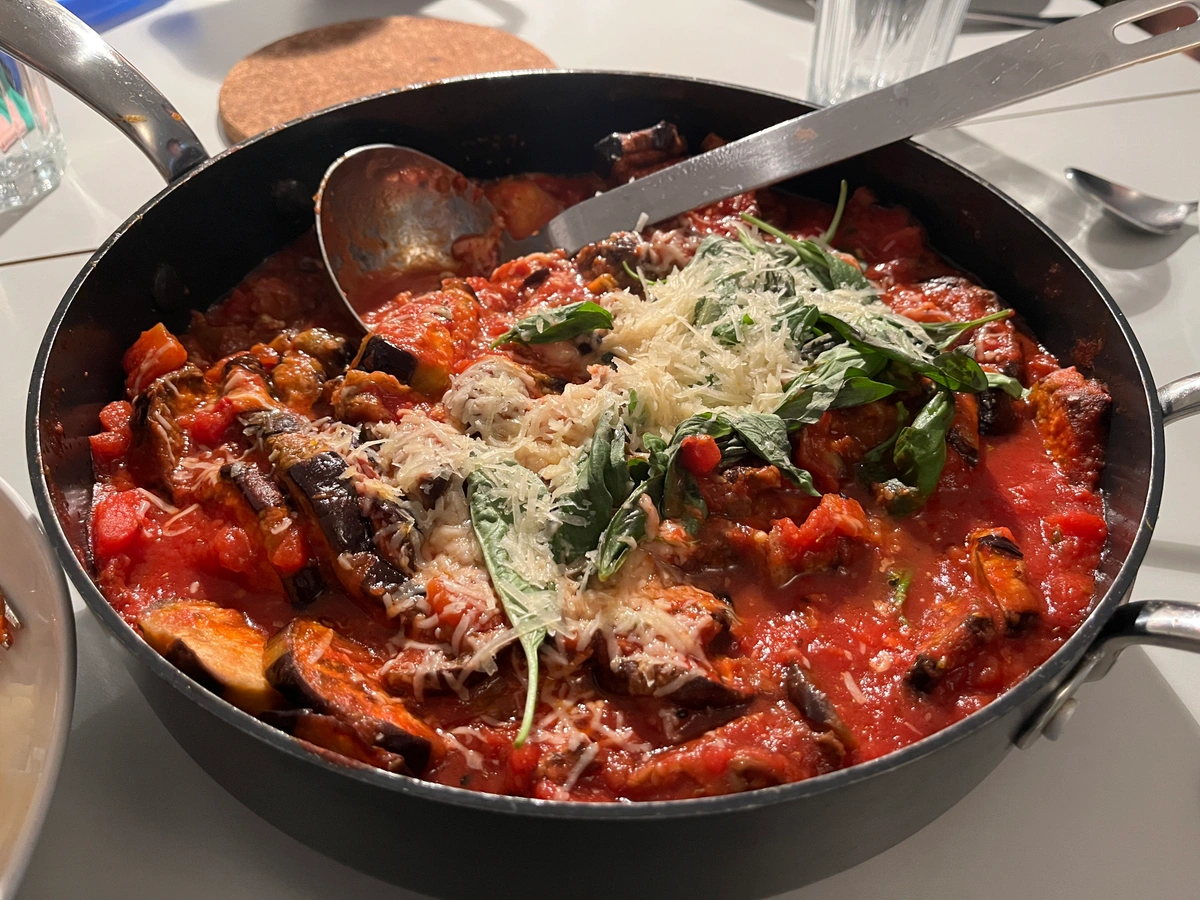
If I had to pick a favourite pasta sauce, it would have to be Pasta alla Norma: a classic Sicilian tomato-based sauce with baked aubergines and fresh herbs - so simple and yet so close to perfection.
Fortunately, baking aubergines requires very little effort to give them a pleasantly soft texture and bring out more of their flavour. It’s well worth it! And don’t worry if the aubergines look a little too soft or dark: that’s often when they’re at their best.
The recipe here is based on one by Yotam Ottolenghi from his cookbook “Simple” (publisher’s website), which is simply a great cookbook and contains many other recipes with good taste and little effort.
With spaghetti as a side dish, relatively little sauce sticks to the pasta. Of course, you can use other types of pasta, such as penne or maccheroni, which absorb the sauce better - but then you lose the pleasure of little nests of sauce on an almost empty plate, ready to be spooned up. 🥰
If you are following a vegan diet, you can easily modify the recipe: Just replace the Pecorino Romano with a vegan alternative and you’re done.
Related Recipes

Parmigiana di Melanzane
A simple recipe for Parmigiana di Melanzane, a classic southern Italian vegetable casserole.

Vegetarian Lasagne with Lentils
The Italian classic made with lentils, spinach and a great crust

Baked Eggplant with Ebly
Inspired by Ottolenghi: our baked eggplant from the oven is simple and delicious, especially in combination with our fresh yogurt sauce.
Recipe
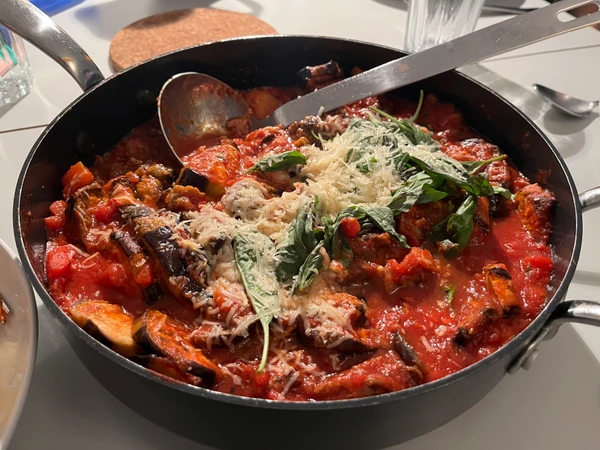
Pasta alla Norma - with baked aubergines, fresh basil, and a touch of Pecorino Romano.
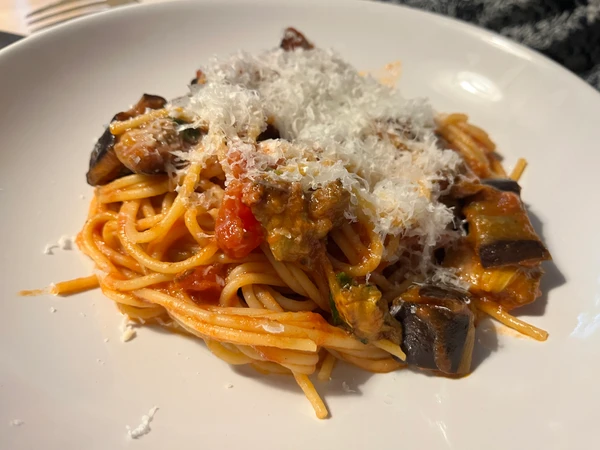
Ready to serve: Pasta alla Norma sprinkled with a little cheese.
Ingredients
Preparation Time: 10 min
Total Time: 45 min
Servings: 2
- • 450 g eggplants
- • 8 tablespoons of olive oil
- • 3 cloves of garlic
- • 1 tin of tomatoes (400 g)
- • 1 pinch of chilli powder
- • 5 g fresh oregano
- • 1/2 teaspoon sugar
- • 150 g spaghetti
- • 40 g Grana Padano or Pecorino Romano cheese
- • 10 g fresh basil
- • 1 pinch of salt
- • 1 pinch of pepper
Ingredients
Servings: 2
Preparation Time: 10 min
Total Time: 45 min
- • 450 g eggplants
- • 8 tablespoons of olive oil
- • 3 cloves of garlic
- • 1 tin of tomatoes (400 g)
- • 1 pinch of chilli powder
- • 5 g fresh oregano
- • 1/2 teaspoon sugar
- • 150 g spaghetti
- • 40 g Grana Padano or Pecorino Romano cheese
- • 10 g fresh basil
- • 1 pinch of salt
- • 1 pinch of pepper
Instructions
- 1 Preheat the oven to 220°C fan. Wash the eggplants and peel them with a peeler to create a pattern of zebra stripes. Then cut them crosswise into slices about 1 cm thick.
- 2 Season the sliced eggplants with 5 tablespoons of olive oil, salt, and pepper and mix together. Spread the slices on a baking tray and bake in the oven for about half an hour.
- 3 In the meantime, peel and finely dice the garlic. Heat 3 tablespoons of olive oil in a large pan and fry the garlic over medium heat for about 5 minutes. Deglaze with the canned tomatoes and season with chilli powder, oregano, a little sugar, salt, and pepper. Reduce the heat, cover the pan, and leave to thicken for about 10 minutes.
- 4 While the eggplants are baking and the sauce is reducing, cook the spaghetti in salted water according to the instructions on the packet.
- 5 Add the baked eggplants to the tomato sauce. Drain the spaghetti, reserving some of the cooking water. Mix the spaghetti with the sauce. Grate the cheese and mix about two-thirds of it into the sauce.
- 6 Serve in deep plates, sprinkling the remaining third of the cheese and the basil over the plates.
Carbon Footprint
Carbon Footprint: 1876 g CO₂e
This ranks it number 37 out of 59 recipes published on the blog so far in terms of estimated carbon footprint.
The carbon footprint of the recipe is therefore slightly higher than the average of the other recipes here on the blog: At least 50% of the recipes cause less emissions, but it is not yet in the worst third of the recipes. 🤨
When it comes to the individual ingredients, the eggplants and Grana Padano are particularly noticeable: Almost 40% of the weight of the ingredients are aubergines, but they only account for about 5% of the climate footprint of the dish. (Baking the aubergines in the oven produces about twice as many emissions as growing them.) For the Grana Padano, it's the other way round: we use only 40 g of cheese, but this amount is responsible for about 250 g of CO2 (that's 13% of the carbon footprint of the whole dish). Otherwise, olive oil and canned tomatoes, as processed ingredients, have a slightly disproportionate impact on the carbon footprint of Pasta alla Norma compared to the amount used in the recipe.
Comparison of Ingredients
| Ingredients | Carbon footprint per kg | Carbon footprint for recipe | % of ingredients | % of CO₂ emissions |
|---|---|---|---|---|
| eggplant | 0.2 | 90 | 39% | 5% |
| olive oil | 3.2 | 256 | 7% | 14% |
| garlic | 0.5 | 4 | 1% | 0% |
| canned tomatoes | 1.8 | 720 | 35% | 38% |
| chili powder | 1.1 | 1 | 0% | 0% |
| fresh oregano | 1.1 | 6 | 0% | 0% |
| sugar | 0.9 | 2 | 0% | 0% |
| spaghetti | 0.7 | 105 | 13% | 6% |
| Grana Padano | 6.3 | 252 | 3% | 13% |
| fresh basil | 1.1 | 11 | 1% | 1% |
| salt | 1.4 | 4 | 0% | 0% |
| pepper | 1.4 | 1 | 0% | 0% |
| Bake eggplant | 241 | 13% | ||
| Cook sauce | 122 | 6% | ||
| Cook pasta | 61 | 3% |
Instructions
- 1 Preheat the oven to 220°C fan. Wash the eggplants and peel them with a peeler to create a pattern of zebra stripes. Then cut them crosswise into slices about 1 cm thick.
- 2 Season the sliced eggplants with 5 tablespoons of olive oil, salt, and pepper and mix together. Spread the slices on a baking tray and bake in the oven for about half an hour.
- 3 In the meantime, peel and finely dice the garlic. Heat 3 tablespoons of olive oil in a large pan and fry the garlic over medium heat for about 5 minutes. Deglaze with the canned tomatoes and season with chilli powder, oregano, a little sugar, salt, and pepper. Reduce the heat, cover the pan, and leave to thicken for about 10 minutes.
- 4 While the eggplants are baking and the sauce is reducing, cook the spaghetti in salted water according to the instructions on the packet.
- 5 Add the baked eggplants to the tomato sauce. Drain the spaghetti, reserving some of the cooking water. Mix the spaghetti with the sauce. Grate the cheese and mix about two-thirds of it into the sauce.
- 6 Serve in deep plates, sprinkling the remaining third of the cheese and the basil over the plates.
Carbon Footprint
Carbon Footprint (2 portions): 1876 g CO₂e
This ranks it number 37 out of 59 recipes published on the blog so far in terms of estimated carbon footprint.
The carbon footprint of the recipe is therefore slightly higher than the average of the other recipes here on the blog: At least 50% of the recipes cause less emissions, but it is not yet in the worst third of the recipes. 🤨
When it comes to the individual ingredients, the eggplants and Grana Padano are particularly noticeable: Almost 40% of the weight of the ingredients are aubergines, but they only account for about 5% of the climate footprint of the dish. (Baking the aubergines in the oven produces about twice as many emissions as growing them.) For the Grana Padano, it's the other way round: we use only 40 g of cheese, but this amount is responsible for about 250 g of CO2 (that's 13% of the carbon footprint of the whole dish). Otherwise, olive oil and canned tomatoes, as processed ingredients, have a slightly disproportionate impact on the carbon footprint of Pasta alla Norma compared to the amount used in the recipe.
Comparison of Ingredients
| Ingredients | Carbon footprint per kg | Carbon footprint for recipe | % of ingredients | % of CO₂ emissions |
|---|---|---|---|---|
| eggplant | 0.2 | 90 | 39% | 5% |
| olive oil | 3.2 | 256 | 7% | 14% |
| garlic | 0.5 | 4 | 1% | 0% |
| canned tomatoes | 1.8 | 720 | 35% | 38% |
| chili powder | 1.1 | 1 | 0% | 0% |
| fresh oregano | 1.1 | 6 | 0% | 0% |
| sugar | 0.9 | 2 | 0% | 0% |
| spaghetti | 0.7 | 105 | 13% | 6% |
| Grana Padano | 6.3 | 252 | 3% | 13% |
| fresh basil | 1.1 | 11 | 1% | 1% |
| salt | 1.4 | 4 | 0% | 0% |
| pepper | 1.4 | 1 | 0% | 0% |
| Bake eggplant | 241 | 13% | ||
| Cook sauce | 122 | 6% | ||
| Cook pasta | 61 | 3% |