Chana Masala: Indian Chickpea Curry
A quick and easy recipe for a classic Indian curry. So simple and so delicious!
Recipe Categories:
Chana masala is a cornerstone of North Indian home cooking — a spiced chickpea curry simmered in a tangy tomato sauce. For many, it’s pure comfort in a bowl: protein-rich, naturally vegan, and ready to tackle busy weeknights or weekend gatherings alike. If you’re new to Indian curries, chana masala is a welcoming introduction with familiar pantry beans transformed by a blend of warm spices and bright acidity.
The character of this dish comes from balancing spiciness against sour and aromatic notes. Dried and ground spices are common in chana masala — coriander, cumin, cinnamon, cardamom — all staples in Indian kitchens, and easy to find in larger supermarkets. If garam masala isn’t in your cupboard, blend a little pepper, cloves, cinnamon, and cardamom as a stand-in. Tamarind paste, if you can find it, brings gentle tartness; a squeeze of lemon will do the job in a pinch.
Sourcing tinned chickpeas and tomatoes makes this recipe weeknight-friendly and climate-wise — no need for long soaking or endless simmering. Swapping in brown rice, local grains, or wholemeal flatbreads like roti or naan (if you have them) keeps things flexible and helps cut the carbon impact of rice. Leftovers are easy to repurpose: try stuffing extra curry into wraps or tossing with roasted vegetables for a second meal.
This version draws inspiration from Cook with Manali and Felicity Cloake for the Guardian.
Related Recipes

Tofu Matar: Curry with Tomatoes, Tofu and Peas
A mild Indian curry with tomato sauce, tofu, and peas.

Lime Dal: Lentil Curry with Lemon and Spices
A great, simple Indian recipe, where the spices and lemon give the lentils a real kick!

Crispy Zucchini and Orzo Salad with Chimichurri
Greek zucchinis and Argentinian herb sauce - the perfect combination.
Recipe
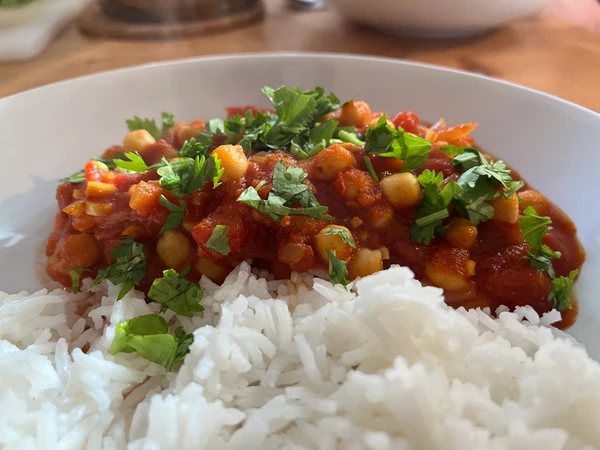
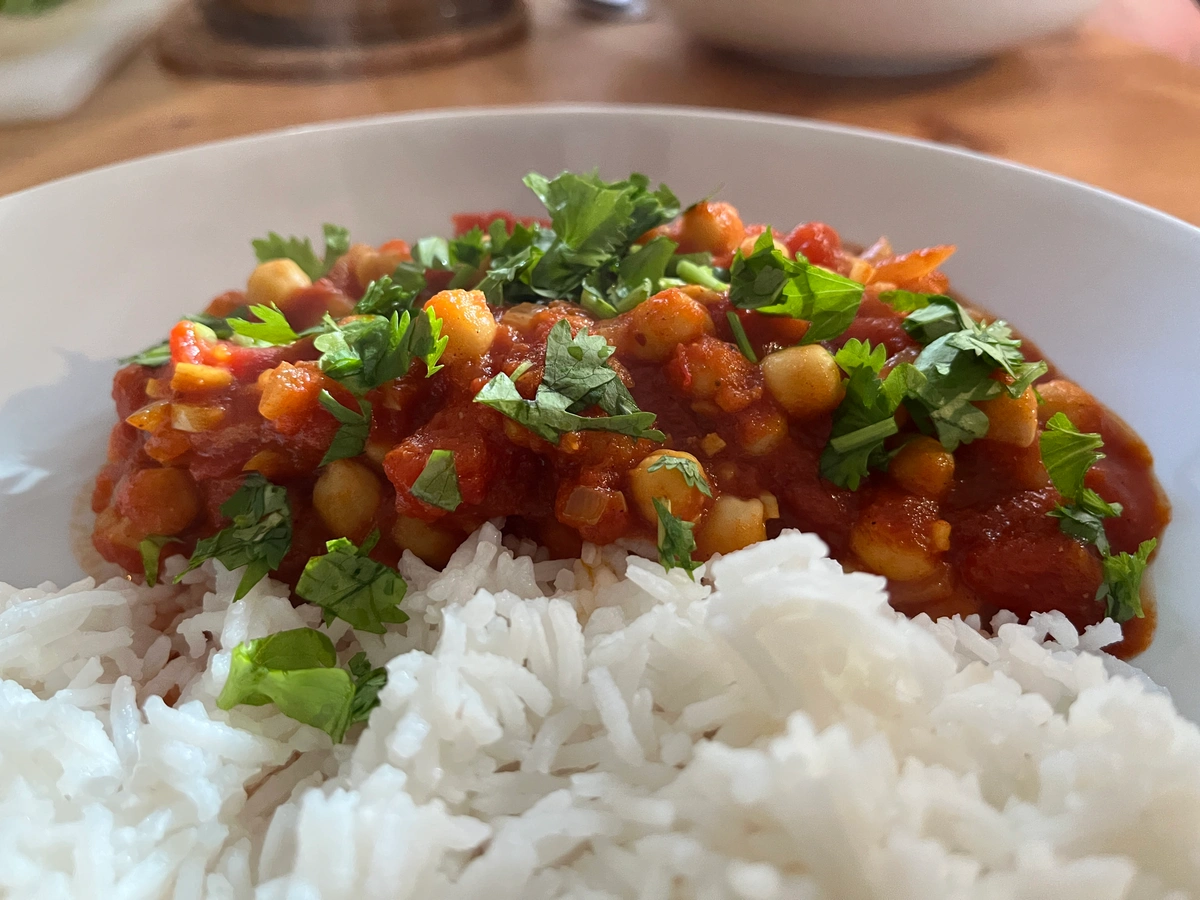
Chana masala, served with rice and fresh coriander.
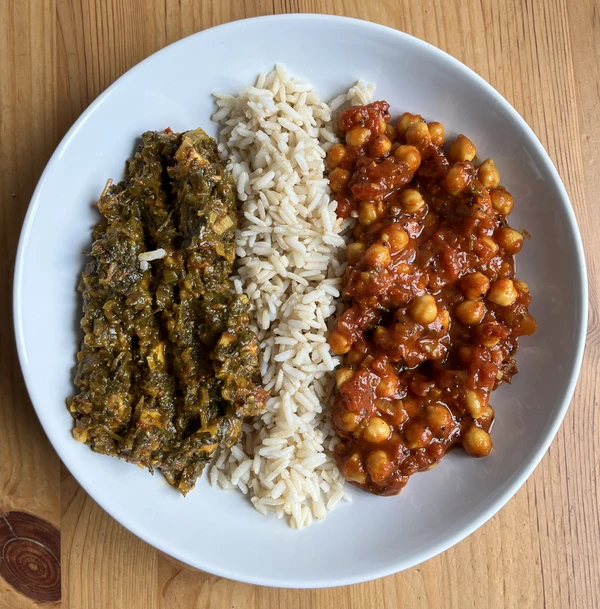
Why just one curry when you can have two? A plate of chana masala and palak paneer...
Ingredients
Preparation Time: 10 min
Total Time: 40 min
Servings: 2
- • 15g ginger
- • 3 cloves garlic
- • 1 red onion
- • 30g neutral oil (e.g. rapeseed oil)
- • 1 teaspoon crushed chilies
- • 1/2 teaspoon cinnamon
- • 1/2 teaspoon cardamom powder
- • 1 bay leaf
- • 1 tablespoon tomato paste
- • 400g tinned tomatoes (canned tomatoes)
- • 250g tinned chickpeas (canned chickpeas)
- • 1 teaspoon coriander powder
- • 1 teaspoon cumin powder
- • 1 teaspoon paprika powder
- • 1/2 teaspoon turmeric powder
- • 1/2 teaspoon garam masala
- • 1 teaspoon tamarind paste
- • 1/2 teaspoon salt
- • 5g fresh coriander
- • 120g rice (for serving)
Ingredients
Servings: 2
Preparation Time: 10 min
Total Time: 40 min
- • 15g ginger
- • 3 cloves garlic
- • 1 red onion
- • 30g neutral oil (e.g. rapeseed oil)
- • 1 teaspoon crushed chilies
- • 1/2 teaspoon cinnamon
- • 1/2 teaspoon cardamom powder
- • 1 bay leaf
- • 1 tablespoon tomato paste
- • 400g tinned tomatoes (canned tomatoes)
- • 250g tinned chickpeas (canned chickpeas)
- • 1 teaspoon coriander powder
Instructions
- 1 Peel the ginger, garlic, and onion. Finely dice all three, or blend them into a paste using a small food processor or mortar and pestle.
- 2 Heat the oil in a large pan over medium heat. Add the crushed chilies, cinnamon, cardamom powder, and bay leaf. Toast the spices gently for about 30 seconds, stirring constantly until aromatic.
- 3 Reduce the heat to medium-low. Add the diced onion, garlic, and ginger to the pan. Cook, stirring often, for 4–5 minutes or until the onion is soft and translucent.
- 4 Add the tomato paste and cook for 1–2 minutes, allowing it to darken slightly.
- 5 Pour in the tinned tomatoes. Swirl a small amount of water (about 50ml) in the tin to catch the last bits, and add that to the pan as well.
- 6 Stir in the chickpeas, coriander powder, cumin powder, paprika powder, turmeric powder, garam masala, tamarind paste, and salt. Mix well to combine.
- 7 Bring the mixture to a gentle simmer. If the curry seems too soupy at this point, leave the lid off and simmer until the sauce thickens. Otherwise, cover with a lid and cook over low heat for 15 minutes, stirring occasionally, until the sauce is thickened and the flavors have melded.
- 8 While the chana masala simmers, rinse the rice under cold water until the water runs clear. Cook the rice in a small saucepan using double its volume in water (about 240ml for 120g rice), covered, until all the water is absorbed and the grains are tender. This usually takes 12–15 minutes; keep an eye on it as timing may vary by type.
- 9 Wash and roughly chop the fresh coriander.
- 10 Taste and adjust seasoning in the chana masala. Remove the bay leaf.
- 11 Serve the chana masala hot over the cooked rice, sprinkled generously with fresh coriander.
Carbon Footprint
Carbon Footprint: 1792 g CO₂e
This ranks it number 33 out of 59 recipes published on the blog so far in terms of estimated carbon footprint.
The carbon footprint of the recipe is therefore slightly higher than the average of the other recipes here on the blog: At least 50% of the recipes cause less emissions, but it is not yet in the worst third of the recipes. 🤨
When it comes to the individual ingredients, chickpeas and rice stand out in particular. Chickpeas account for 27% of the weight of the ingredients, but only 18% of the climate footprint. Conversely, rice is about 13% of the ingredient weight, but 21% of the estimated CO2 emissions.
Comparison of Ingredients
| Ingredients | Carbon footprint per kg | Carbon footprint for recipe | % of ingredients | % of CO₂ emissions |
|---|---|---|---|---|
| ginger | 0.5 | 7 | 2% | 0% |
| garlic | 0.5 | 4 | 1% | 0% |
| onion | 0.2 | 10 | 5% | 1% |
| oil | 3.3 | 99 | 3% | 6% |
| chili (crushed) | 1.1 | 5 | 0% | 0% |
| cinnamon | 1.1 | 2 | 0% | 0% |
| cardamom | 1.1 | 2 | 0% | 0% |
| bay leaf | 1.1 | 1 | 0% | 0% |
| tomato paste | 4.3 | 65 | 2% | 4% |
| canned tomatoes | 1.8 | 720 | 44% | 40% |
| chickpeas | 1.3 | 325 | 27% | 18% |
| coriander | 1.1 | 3 | 0% | 0% |
| cumin | 1.1 | 3 | 0% | 0% |
| turmeric | 1.1 | 2 | 0% | 0% |
| garam masala | 1.1 | 2 | 0% | 0% |
| tamarind paste | 1.1 | 3 | 0% | 0% |
| salt | 0.7 | 2 | 0% | 0% |
| coriander (fresh) | 1.2 | 6 | 1% | 0% |
| rice | 3.1 | 372 | 13% | 21% |
| Cook curry | 122 | 7% | ||
| Cook rice | 37 | 2% |
Instructions
- 1 Peel the ginger, garlic, and onion. Finely dice all three, or blend them into a paste using a small food processor or mortar and pestle.
- 2 Heat the oil in a large pan over medium heat. Add the crushed chilies, cinnamon, cardamom powder, and bay leaf. Toast the spices gently for about 30 seconds, stirring constantly until aromatic.
- 3 Reduce the heat to medium-low. Add the diced onion, garlic, and ginger to the pan. Cook, stirring often, for 4–5 minutes or until the onion is soft and translucent.
- 4 Add the tomato paste and cook for 1–2 minutes, allowing it to darken slightly.
- 5 Pour in the tinned tomatoes. Swirl a small amount of water (about 50ml) in the tin to catch the last bits, and add that to the pan as well.
- 6 Stir in the chickpeas, coriander powder, cumin powder, paprika powder, turmeric powder, garam masala, tamarind paste, and salt. Mix well to combine.
- 7 Bring the mixture to a gentle simmer. If the curry seems too soupy at this point, leave the lid off and simmer until the sauce thickens. Otherwise, cover with a lid and cook over low heat for 15 minutes, stirring occasionally, until the sauce is thickened and the flavors have melded.
- 8 While the chana masala simmers, rinse the rice under cold water until the water runs clear. Cook the rice in a small saucepan using double its volume in water (about 240ml for 120g rice), covered, until all the water is absorbed and the grains are tender. This usually takes 12–15 minutes; keep an eye on it as timing may vary by type.
- 9 Wash and roughly chop the fresh coriander.
- 10 Taste and adjust seasoning in the chana masala. Remove the bay leaf.
- 11 Serve the chana masala hot over the cooked rice, sprinkled generously with fresh coriander.
Carbon Footprint
Carbon Footprint (2 portions): 1792 g CO₂e
This ranks it number 33 out of 59 recipes published on the blog so far in terms of estimated carbon footprint.
The carbon footprint of the recipe is therefore slightly higher than the average of the other recipes here on the blog: At least 50% of the recipes cause less emissions, but it is not yet in the worst third of the recipes. 🤨
When it comes to the individual ingredients, chickpeas and rice stand out in particular. Chickpeas account for 27% of the weight of the ingredients, but only 18% of the climate footprint. Conversely, rice is about 13% of the ingredient weight, but 21% of the estimated CO2 emissions.
Comparison of Ingredients
| Ingredients | Carbon footprint per kg | Carbon footprint for recipe | % of ingredients | % of CO₂ emissions |
|---|---|---|---|---|
| ginger | 0.5 | 7 | 2% | 0% |
| garlic | 0.5 | 4 | 1% | 0% |
| onion | 0.2 | 10 | 5% | 1% |
| oil | 3.3 | 99 | 3% | 6% |
| chili (crushed) | 1.1 | 5 | 0% | 0% |
| cinnamon | 1.1 | 2 | 0% | 0% |
| cardamom | 1.1 | 2 | 0% | 0% |
| bay leaf | 1.1 | 1 | 0% | 0% |
| tomato paste | 4.3 | 65 | 2% | 4% |
| canned tomatoes | 1.8 | 720 | 44% | 40% |
| chickpeas | 1.3 | 325 | 27% | 18% |
| coriander | 1.1 | 3 | 0% | 0% |
| cumin | 1.1 | 3 | 0% | 0% |
| turmeric | 1.1 | 2 | 0% | 0% |
| garam masala | 1.1 | 2 | 0% | 0% |
| tamarind paste | 1.1 | 3 | 0% | 0% |
| salt | 0.7 | 2 | 0% | 0% |
| coriander (fresh) | 1.2 | 6 | 1% | 0% |
| rice | 3.1 | 372 | 13% | 21% |
| Cook curry | 122 | 7% | ||
| Cook rice | 37 | 2% |