Classic White Asparagus with Creamy Béchamel Sauce, Boiled Potatoes and Salad
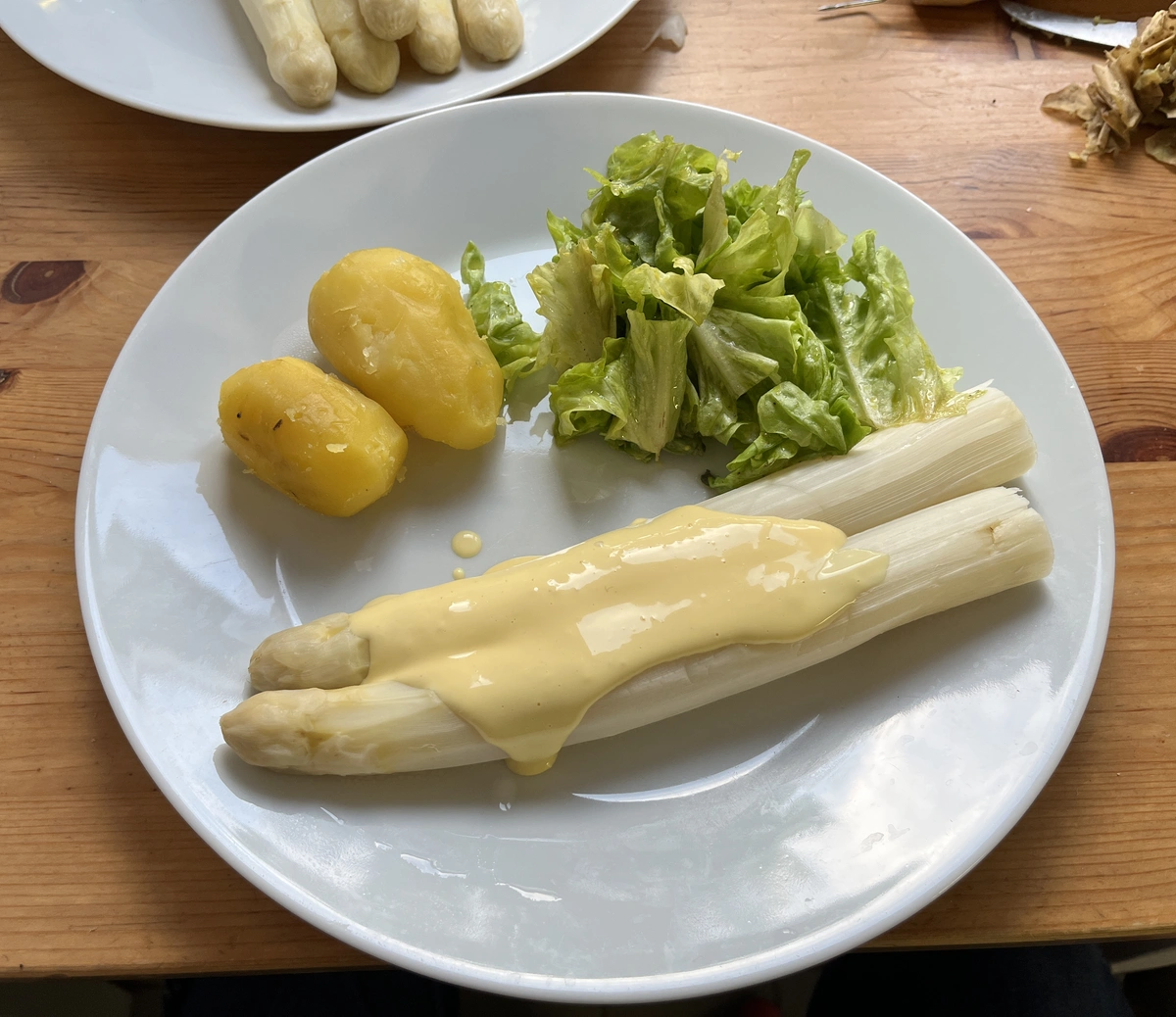
This recipe for boiled white asparagus with a béchamel sauce is simply a great recipe and a classic dish in Germany.
Recipe Categories:
May is asparagus season in Germany. This is an important principle of German cuisine. In late spring or early summer, there is hardly a traditional restaurant that does not have a seasonal asparagus menu - and many home cooks also like to prepare this vegetable at this time of year.
A classic is, of course, boiled white asparagus with béchamel sauce, often served with potatoes that have been boiled in their skin, sometimes with boiled ham. But what is the carbon footprint of this classic recipe? Let’s find out!
Related Recipes

Lentils with Spätzle (Vegetarian Swabian Classic)
Lentils with Spätzle are a Swabian classic — here in a vegetarian version, still served with veggie sausages.

Swabian Pancake Soup
The Swabian classic for using up pancake leftovers - simple, delicious and on the table in no time at all.

Beetroot Quiche (with a Side Salad)
A quick and easy veggie quiche with beetroot.
Recipe
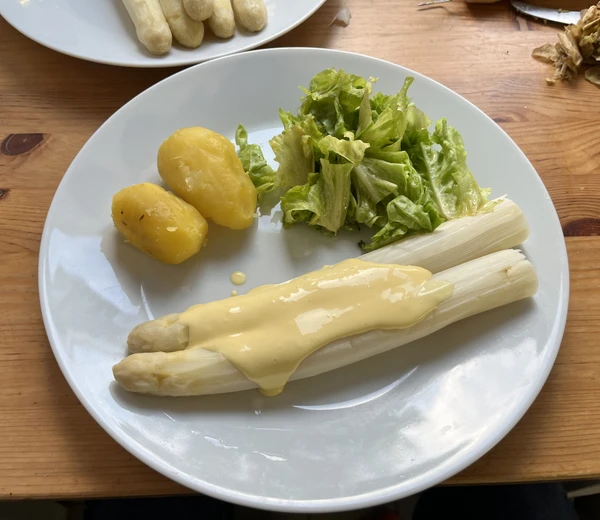
Simply a classic: White asparagus with potatoes and béchamel sauce.
Ingredients
Preparation Time: 10 min
Total Time: 35 min
Servings: 2
- • 800 g white asparagus
- • 1 pinch of salt
- • 1 pinch of sugar
- • 1 dash of lemon juice
- • 50 g butter
- • 50 g flour
- • 600 ml milk
- • 1 bay leaf
- • 1 pinch of salt
- • 1 pinch of nutmeg
- • 300-400 g potatoes
- • 1 pinch of salt
- • 100-150 g lettuce
- • 6 tablespoons of oil
- • 3 tablespoons of vinegar
- • 1 pinch of salt
- • 1 pinch of pepper
- • 1 pinch of sugar
- • 1 tablespoon of mustard
Ingredients
Servings: 2
Preparation Time: 10 min
Total Time: 35 min
- • 800 g white asparagus
- • 1 pinch of salt
- • 1 pinch of sugar
- • 1 dash of lemon juice
- • 50 g butter
- • 50 g flour
- • 600 ml milk
- • 1 bay leaf
- • 1 pinch of salt
- • 1 pinch of nutmeg
- • 300-400 g potatoes
- • 1 pinch of salt
Instructions
- 1 Make the béchamel sauce: Melt the butter in a saucepan over medium heat. Whisk in the flour to form a roux. Add the milk and the bay leaf. Simmer over low heat for 20-25 minutes, stirring occasionally with a whisk. Season to taste with salt and nutmeg, and remove the bay leaf before serving.
- 2 While the béchamel sauce is reducing, prepare the potatoes: Coarsely brush the potatoes. Boil them in plenty of salted water for about 20 minutes. At the end of the cooking time, use a fork to check that the potatoes are cooked through: if the fork meets with resistance and the potatoes are still firm inside, extend the cooking time a little. When the potatoes are cooked, pour off the water and let it evaporate in the pan.
- 3 Peel the asparagus. Bring a large pan of water to the boil. Add the salt, sugar, and lemon juice, then add the asparagus spears. Cook on low heat for about 10 minutes. You can use a fork to check if the asparagus is cooked.
- 4 Wash and trim the lettuce. Mix the remaining ingredients to make a classic vinaigrette dressing. Toss the salad with the dressing.
- 5 Serve the asparagus with the potatoes and the béchamel sauce.
Carbon Footprint
Carbon Footprint: 2480 g CO₂e
This ranks it number 48 out of 59 recipes published on the blog so far in terms of estimated carbon footprint.
Overall, it is one of the 20% of recipes with the highest climate impact - at least 80% of recipes cause fewer emissions than this dish. 😞
On the other hand, it is still better than recipes based on meat, which have a carbon footprint at least 50% higher. When it comes to ingredients, butter is of course the most obvious: We actually use very little of it for the roux, but it accounts for almost a fifth of the recipe's carbon footprint. This is, of course, due to the fact that cattle farming is not exactly resource-friendly and that it takes around 20-25 litres of milk to make 1kg of butter. The asparagus itself and the potatoes have a fairly good carbon footprint. A different asparagus recipe without the béchamel sauce would therefore be expected to have a lower carbon footprint.
Comparison of Ingredients
| Ingredients | Carbon footprint per kg | Carbon footprint for recipe | % of ingredients | % of CO₂ emissions |
|---|---|---|---|---|
| asparagus | 0.7 | 560 | 38% | 23% |
| salt | 1.4 | 3 | 0% | 0% |
| sugar | 0.7 | 1 | 0% | 0% |
| lemon juice | 0.6 | 3 | 0% | 0% |
| butter | 9.0 | 450 | 2% | 18% |
| flour | 0.9 | 45 | 2% | 2% |
| milk | 1.4 | 840 | 29% | 34% |
| bay leaf | 1.1 | 2 | 0% | 0% |
| salt | 1.4 | 3 | 0% | 0% |
| nutmeg | 1.1 | 1 | 0% | 0% |
| potatoes | 0.2 | 70 | 17% | 3% |
| salt | 1.4 | 3 | 0% | 0% |
| lettuce | 0.3 | 38 | 6% | 2% |
| oil | 3.2 | 192 | 3% | 8% |
| vinegar | 0.2 | 7 | 1% | 0% |
| salt | 1.4 | 3 | 0% | 0% |
| pepper | 1.4 | 1 | 0% | 0% |
| sugar | 0.7 | 1 | 0% | 0% |
| mustard | 0.2 | 2 | 0% | 0% |
| Cook béchamel sauce | 73 | 3% | ||
| Cook potatoes | 61 | 2% | ||
| Cook asparagus | 122 | 5% |
Instructions
- 1 Make the béchamel sauce: Melt the butter in a saucepan over medium heat. Whisk in the flour to form a roux. Add the milk and the bay leaf. Simmer over low heat for 20-25 minutes, stirring occasionally with a whisk. Season to taste with salt and nutmeg, and remove the bay leaf before serving.
- 2 While the béchamel sauce is reducing, prepare the potatoes: Coarsely brush the potatoes. Boil them in plenty of salted water for about 20 minutes. At the end of the cooking time, use a fork to check that the potatoes are cooked through: if the fork meets with resistance and the potatoes are still firm inside, extend the cooking time a little. When the potatoes are cooked, pour off the water and let it evaporate in the pan.
- 3 Peel the asparagus. Bring a large pan of water to the boil. Add the salt, sugar, and lemon juice, then add the asparagus spears. Cook on low heat for about 10 minutes. You can use a fork to check if the asparagus is cooked.
- 4 Wash and trim the lettuce. Mix the remaining ingredients to make a classic vinaigrette dressing. Toss the salad with the dressing.
- 5 Serve the asparagus with the potatoes and the béchamel sauce.
Carbon Footprint
Carbon Footprint (2 portions): 2480 g CO₂e
This ranks it number 48 out of 59 recipes published on the blog so far in terms of estimated carbon footprint.
Overall, it is one of the 20% of recipes with the highest climate impact - at least 80% of recipes cause fewer emissions than this dish. 😞
On the other hand, it is still better than recipes based on meat, which have a carbon footprint at least 50% higher. When it comes to ingredients, butter is of course the most obvious: We actually use very little of it for the roux, but it accounts for almost a fifth of the recipe's carbon footprint. This is, of course, due to the fact that cattle farming is not exactly resource-friendly and that it takes around 20-25 litres of milk to make 1kg of butter. The asparagus itself and the potatoes have a fairly good carbon footprint. A different asparagus recipe without the béchamel sauce would therefore be expected to have a lower carbon footprint.
Comparison of Ingredients
| Ingredients | Carbon footprint per kg | Carbon footprint for recipe | % of ingredients | % of CO₂ emissions |
|---|---|---|---|---|
| asparagus | 0.7 | 560 | 38% | 23% |
| salt | 1.4 | 3 | 0% | 0% |
| sugar | 0.7 | 1 | 0% | 0% |
| lemon juice | 0.6 | 3 | 0% | 0% |
| butter | 9.0 | 450 | 2% | 18% |
| flour | 0.9 | 45 | 2% | 2% |
| milk | 1.4 | 840 | 29% | 34% |
| bay leaf | 1.1 | 2 | 0% | 0% |
| salt | 1.4 | 3 | 0% | 0% |
| nutmeg | 1.1 | 1 | 0% | 0% |
| potatoes | 0.2 | 70 | 17% | 3% |
| salt | 1.4 | 3 | 0% | 0% |
| lettuce | 0.3 | 38 | 6% | 2% |
| oil | 3.2 | 192 | 3% | 8% |
| vinegar | 0.2 | 7 | 1% | 0% |
| salt | 1.4 | 3 | 0% | 0% |
| pepper | 1.4 | 1 | 0% | 0% |
| sugar | 0.7 | 1 | 0% | 0% |
| mustard | 0.2 | 2 | 0% | 0% |
| Cook béchamel sauce | 73 | 3% | ||
| Cook potatoes | 61 | 2% | ||
| Cook asparagus | 122 | 5% |